Hot yoga's benefits come with one non-negotiable responsibility: managing heat. A class at 95 to 105 degrees will take a quart or more of sweat out of an average adult, and the difference between practitioners who thrive in the room and those who feel flattened by it is rarely fitness. It is hydration, handled on a schedule rather than by instinct. Teachers in Mooresville, at Good Soul Hot Yoga and everywhere else this practice is taught seriously, repeat the same guidance because it works. This guide collects it in one place.
None of it is complicated, but all of it is timing. By the time you feel behind on water in a heated class, you are behind in a way the class itself cannot fix.
The hydration checklist
- Drink steadily through the day of class, not just in the hour before it
- Have a full bottle of water in the two hours before class, then stop guzzling right before the door
- Bring a large bottle into the room and sip at the natural breaks, not only when desperate
- Add electrolytes, through a drink, a tablet, or food, because sweat removes sodium and potassium along with water
- Eat a light meal a few hours before; avoid practicing heated on a completely empty or a full stomach
- After class, keep drinking over the next hours and eat a normal meal with some salt
- Skip alcohol before a heated class; it works directly against everything on this list
The electrolytes point is the one most often missed. Water alone replaces volume, but heavy sweating also drains the minerals that let your body hold and use that water, which is why a person can drink plenty and still feel headachey and flat after a hot class. A sports drink, an electrolyte tablet in the bottle, coconut water, or simply a salted meal afterward closes that gap. Regulars treat it as part of the class, not an optional extra.
Reading your own signals
Heat stress announces itself in a sequence, and learning the early announcements is the core safety skill. The first signs are a rising sense of effort out of proportion to the posture, a headache beginning, nausea, dizziness when standing up from the floor, and, more seriously, chills or a feeling that sweating has stopped. The correct response to the early signs is boring and effective: stop, lie down on the mat, breathe through the nose, and let your heart rate come down. The tradition in Hot 26 rooms, rest in the room rather than leaving, exists because the cool-down is gentler that way and because most episodes pass in a few minutes of stillness.
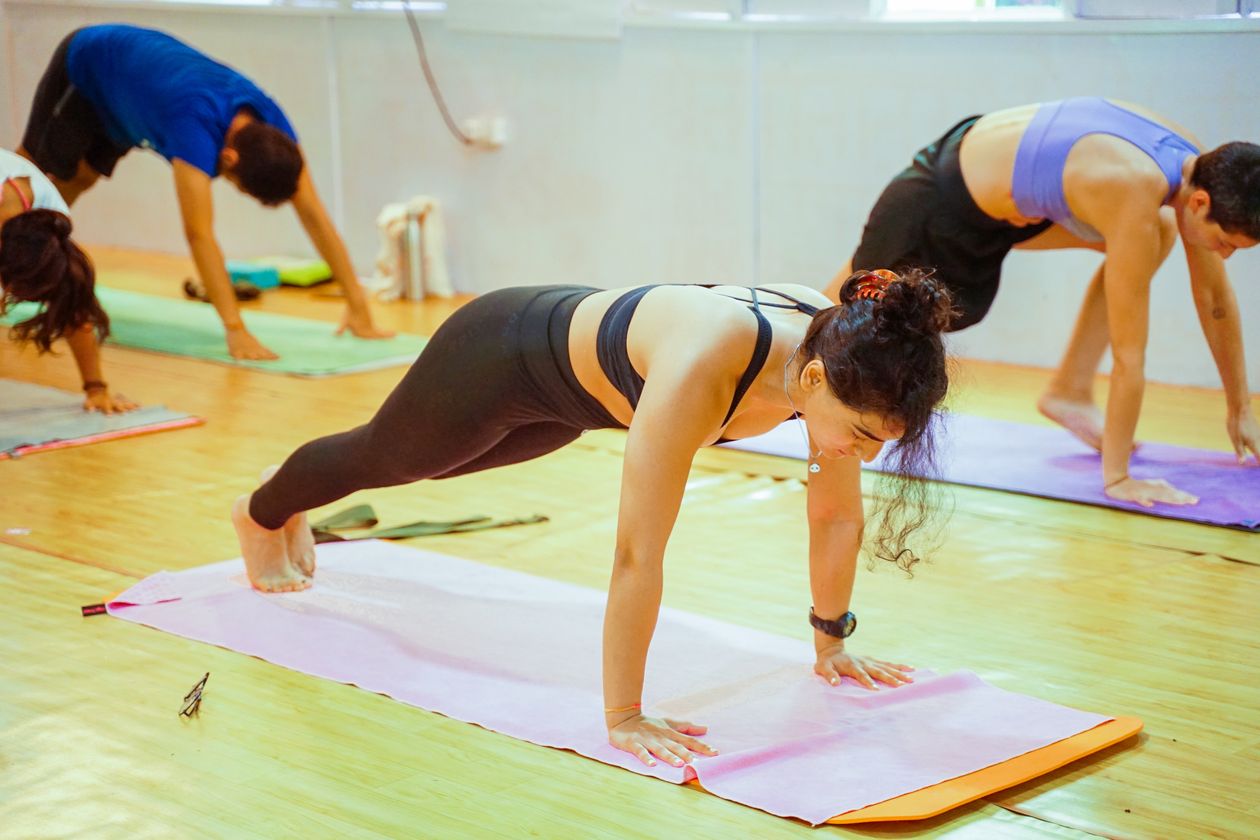
Leaving is always allowed, and sitting out the rest of a class is always acceptable. The bright line is this: symptoms that do not resolve with rest, confusion, or a racing heart that will not settle are reasons to end the session and cool down outside, and anyone with a heart condition, blood pressure concerns, or a pregnancy should clear heated practice with their doctor first. That is not legal boilerplate; heat plus exertion is a genuinely strong stimulus, and strong stimuli deserve respect.
Special cases: summer, beginners, and back-to-back days
Mooresville summers stack the deck. Arriving at a 105-degree room already heat-loaded from a North Carolina afternoon in the high 90s is different from arriving in January, and your water intake for the day should reflect the weather, not just the class. Beginners should treat their first month as acclimation, choosing the cooler heated formats and shorter exposures before attempting the full Hot 26 at full enthusiasm. And back-to-back heated days are for adapted practitioners; in your first months, alternate heated days with gentle or non-heated ones, and let sleep and appetite tell you if you are recovering. If both go strange, they are voting for a rest day, and they are usually right.
Handled this way, heat stops being the risk in the room and goes back to being what it is meant to be: a training tool that makes ordinary postures honest work, and a discipline that teaches you to manage yourself as carefully as you manage the shapes.
Common questions
How much water should I drink before a hot yoga class?
Build up through the day, with roughly a full bottle in the two hours before class. Arriving hydrated matters more than drinking during the class itself.
Do I really need electrolytes?
For heated classes, yes, in some form. Sweat removes sodium and potassium as well as water, and replacing only water is why many people feel flat or headachey afterward.
What should I do if I feel dizzy in class?
Lie down on your mat and breathe slowly through your nose until it passes. If symptoms do not settle with rest, leave the room, cool down, and end the session.
Photos in this guide are representative stock images.
← All guides from Good Soul Hot Yoga← Back to Good Soul Hot Yoga