Most yoga classes are choreographed fresh by the teacher, which means no two are alike. Hot 26, the style taught at Good Soul Hot Yoga in Mooresville under the Bikram tradition, goes the opposite way: twenty-six postures and two breathing exercises, always in the same order, each posture done twice, in a room heated to about 105 degrees at 40 percent humidity. Students who love it describe the fixed sequence as the entire point. Students who are new often ask why anyone would design a class that never changes. The answer is that the sameness is a measuring instrument.
Because the sequence does not change, you do. The posture that defeated you in March is visibly easier in May, and there is no ambiguity about whether the class got easier or you got stronger. The class did not move. You did.
The shape of the sequence
- Opening breathing. The class starts with a standing deep breathing exercise that expands the lungs and settles the room's attention.
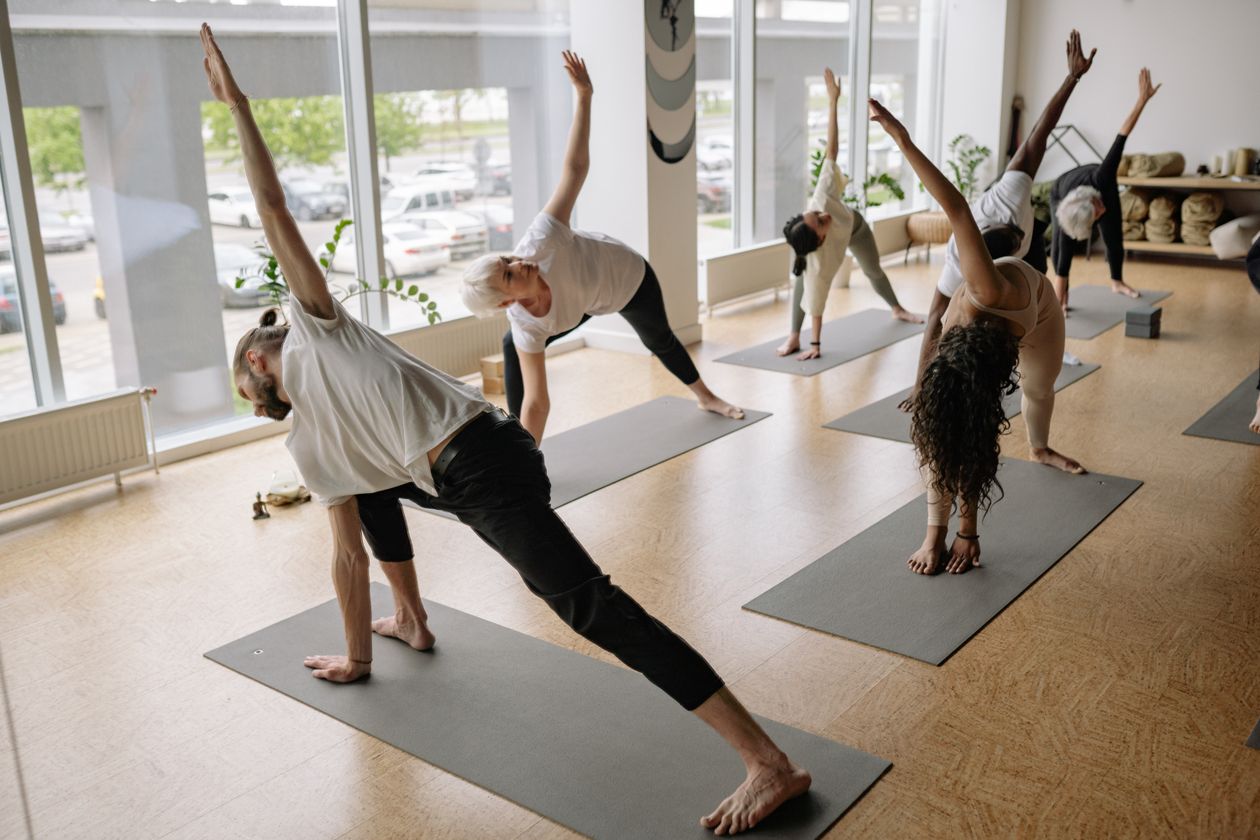
- Standing series. Balance and strength postures follow: half moon, awkward pose, eagle, and a run of one-legged balances that build legs and focus.
- The spine moment. A brief savasana on the floor marks the turn from standing work to floor work, and the room's energy changes with it.
- Floor series. Postures on the mat work the spine in every direction: cobra and locust for the back, bow for the front body, stretches for hips and hamstrings.
- Finishing work. Seated twists, deeper stretches, and the final breathing exercise close the sequence, followed by a full rest.
- Final savasana. The class ends lying still, which practitioners consider a posture in its own right, not an absence of one.
The two-sets structure matters as much as the order. The first set of each posture is diagnostic: it shows you where your body is today, which hip is tighter, which balance is off. The second set is where the work happens, usually a little deeper, informed by the first. Teachers give the same cues at the same moments class after class, and regulars find their minds quieting precisely because no decision-making is required. You are never wondering what comes next, so attention can go entirely into the posture you are in.
Why the heat, specifically
The room is heated to around 105 degrees with humidity because the sequence assumes warm muscles. Heat increases blood flow and lets muscles and connective tissue stretch with less resistance, which is the practical claim, and it raises the cardiovascular demand of postures that would be moderate in a cool room, which is the training claim. It also enforces humility. A posture you can do easily at home becomes a negotiation at 105 degrees, and that negotiation, repeated twice a week, is a large part of what practitioners are actually buying.
The heat is also the main caution. It magnifies everything, including overexertion, so the tradition's insistence on resting in the room rather than pushing through dizziness is not a soft guideline. It is load management, built into the method by people who learned the hard way.
Who the fixed sequence suits
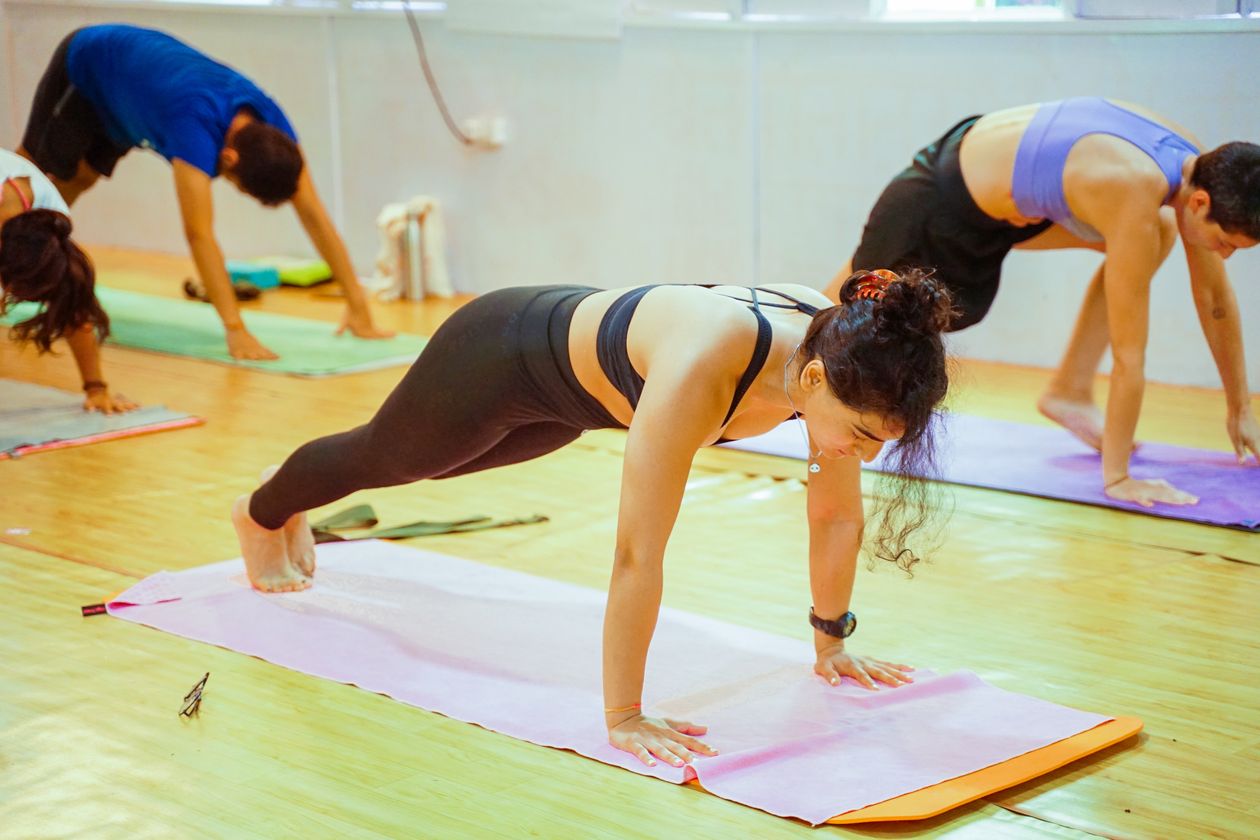
Hot 26 suits people who like measurable progress, people whose minds race in freestyle classes, and people returning to exercise who want a complete, repeatable workout that covers strength, balance, flexibility, and spine health in one session. It frustrates people who need variety to stay interested, and it can be a poor first-ever movement experience for someone who has not yet learned how their body handles heat. Good Soul's schedule answers that by surrounding Hot 26 with other formats, deep stretch in a gentler heat, non-heated essentials for foundations, and hot pilates for people who want the sweat with more motion. The sequence is a pillar of the studio, not the whole building, and choosing it two or three times a week while varying the rest is how most long-term practitioners actually live with it.
A final practical note: because the sequence is fixed, many practitioners learn the posture names within a few weeks, and the vocabulary travels. Standing head to knee, triangle, cobra, and camel mean the same thing in a Hot 26 room in Mooresville as in one in another state, which makes the practice unusually portable for people who travel. Drop into a class in a strange city and the workout is waiting, identical, like a chain hotel for your hamstrings. For people whose lives move around, that consistency is not a limitation of the format. It is one of its great comforts.
Common questions
Is Hot 26 the same as Bikram yoga?
Hot 26 follows the Bikram-style sequence of 26 postures and two breathing exercises in a heated room. Studios use the Hot 26 name for the same traditional format.
Why is every class identical?
The fixed sequence is the method. Because the postures never change, changes in your strength, balance, and flexibility are easy to see and measure.
How often should I practice Hot 26?
Two to three times a week is a sustainable rhythm for most people, often mixed with gentler or non-heated classes on the other days.
Photos in this guide are representative stock images.
← All guides from Good Soul Hot Yoga← Back to Good Soul Hot Yoga