The fate of most new yoga routines is decided by arithmetic, not motivation. People sign up inspired, schedule five classes a week, miss two, feel behind by Friday, and quit by the second month with the odd belief that they failed at yoga. They did not fail at yoga. They failed at scheduling, which is a different and fixable problem. Studios in Mooresville like Good Soul Hot Yoga, with heated classes, spin, strength, stretch, and breathwork all on one schedule, give you every ingredient a sustainable week needs. The routine below assembles them the way experienced practitioners quietly do.
The design principle is simple: a low floor, a balanced mix, and progression you can feel. Everything else is decoration.
The build, step by step
- Set the floor at two classes. Choose two anchor classes you will attend in a bad week, not a good one. This floor is the routine; everything else is bonus.
- Anchor them to existing habits. Attach classes to fixed points, after work on Tuesdays, Saturday morning before errands, so attendance needs no fresh decision.
- Mix the stresses. Across the week, combine one hard heated class, one strength-oriented class, and one gentle class, rather than three of the same kind.
- Add the third and fourth class as float. Let extra classes be opportunistic, a spin when energy is high, a breathwork session when it is not, instead of obligations.
- Progress one variable at a time. Every few weeks, deepen one thing: a hotter class, a longer hold, a new format. Never all three at once.
- Review monthly, adjust coldly. Once a month, look at what you actually attended and rebuild the plan around that reality instead of the fantasy version.
The floor concept deserves its weight in the plan. A routine with a floor of two cannot be failed by a sick kid, a work trip, or a rainy week; it can only be met or exceeded, which reverses the emotional math that kills most fitness habits. People who practice for years are not the people who never miss. They are the people whose plan makes missing survivable.

Mixing the menu intelligently
A full-service schedule is a set of distinct stresses, and the mix matters more than the volume. Heated yoga like Hot 26 trains strength, balance, and heat tolerance in a fixed sequence. Inferno Hot Pilates and spin train cardiovascular capacity and muscular endurance with more motion and less stillness. The 25-minute strength class builds the plain force that makes postures safer. Deep stretch, yin, and tai chi handle mobility and the nervous system. Breathwork handles recovery of a different kind. A week that touches three of those categories will develop a more capable body than a week that repeats one of them five times, and it will be far more interesting, which is a legitimate design goal and not a soft one: boredom is the second most common reason routines die.
The social and practical glue
Two unglamorous factors decide more routines than any philosophy. The first is friction: a studio on your actual route, a bag packed the night before, a class time that does not require heroic logistics. Raceway Drive works for Mooresville because it sits in people's real paths, and your routine should be equally honest about geography. The second is people. Knowing two classmates and a teacher who notices your absence converts a class from an appointment into a commitment, and it is the mechanism behind the community that Good Soul's students and teachers keep describing in their own words. Introduce yourself, learn a name a week, and let the room start expecting you.
Expect the arc: a hard first month of soreness and scheduling, a second month where the floor feels easy, and a third where the practice starts quietly reorganizing your sleep, your patience, and your sense of what a good week contains. That arc has not changed in a very long time, and it is available at two classes a week, which is the most useful fact in this entire guide.
Common questions
How many yoga classes a week is enough?
Two classes a week, sustained, produces real progress in strength, flexibility, and stress. Three to four is a strong routine. Consistency matters more than volume.
Should I do heated classes every day?
Not as a beginner. Alternate heated days with gentle or non-heated classes so your body can recover and adapt to the heat progressively.
What is the best class time to stick with?
The one attached to a habit you already keep, like right after work or first thing Saturday. A routine anchored to existing routines survives busy weeks.
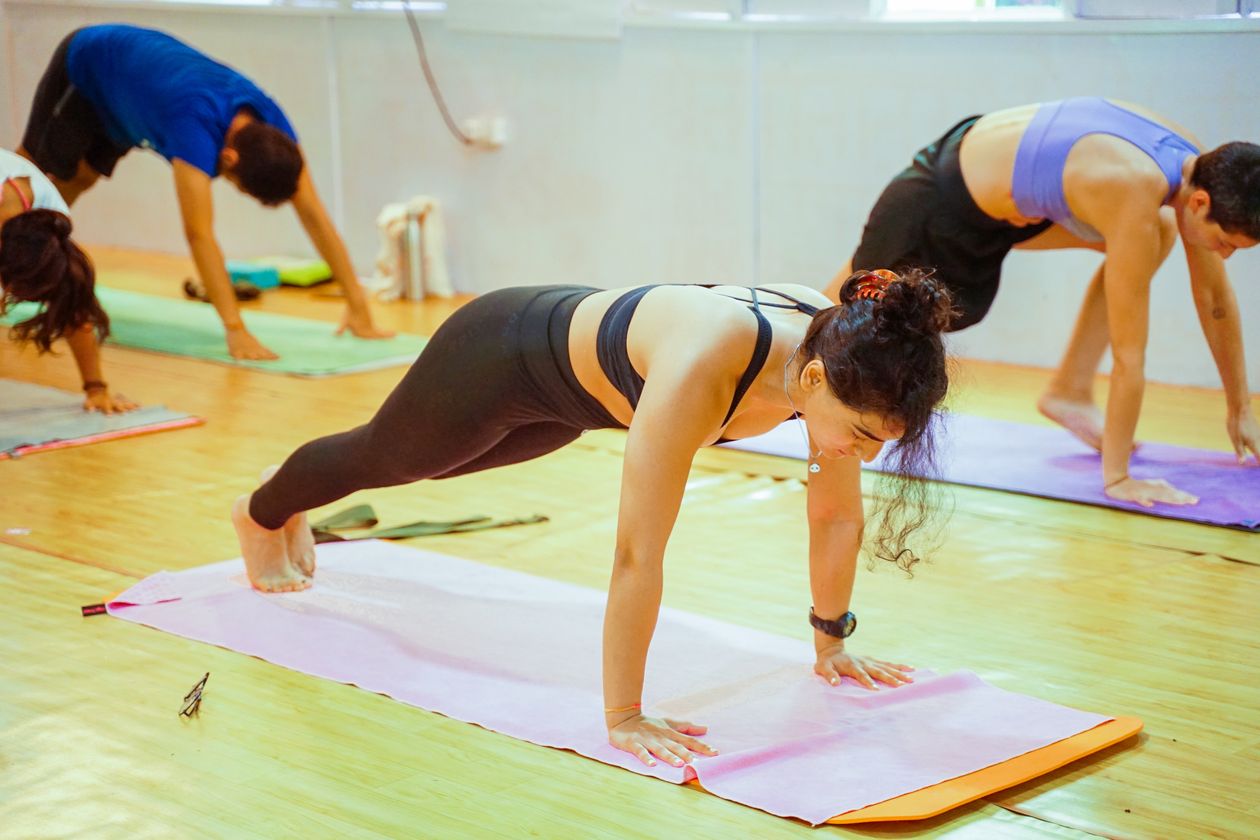
Photos in this guide are representative stock images.
← All guides from Good Soul Hot Yoga← Back to Good Soul Hot Yoga